From Revelstoke to The Green Channel: How a Scientist Became the Voice of Living Things
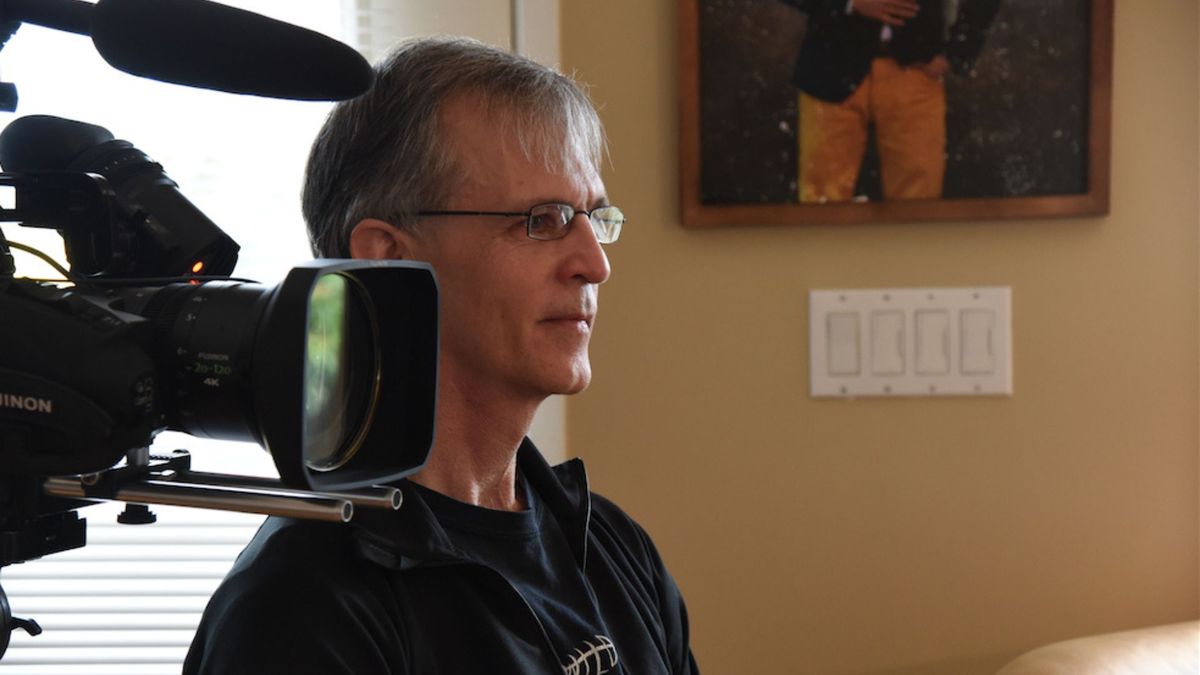
Scott Renyard grew up in Revelstoke, B.C., a small town in the Rockies. He studied botany and resource management at UBC, and was planning a career in regional planning. A gig on a film set turned into a new career. Thirty-five years and many films and television projects later, Scott founded The Green Channel, a streaming service dedicated to environmental content from filmmakers around the world. We sat down with Scott to talk about how a kid from the BC interior ended up building a platform that he hopes will become, in his words, the “voice of living things”.
This article is a part of our interview series with Scott Renyard, founder of The Green Channel. Read the other parts here: From the Chilliwack River to Climate Change: The Pristine Coast Story, 119 Inside the Courtroom, The Films of Scott Renyard.
Question: You grew up in Revelstoke, BC, and studied botany at UBC before going on to complete a master’s in resource management. What was it about the natural world that first grabbed your attention as a young person?
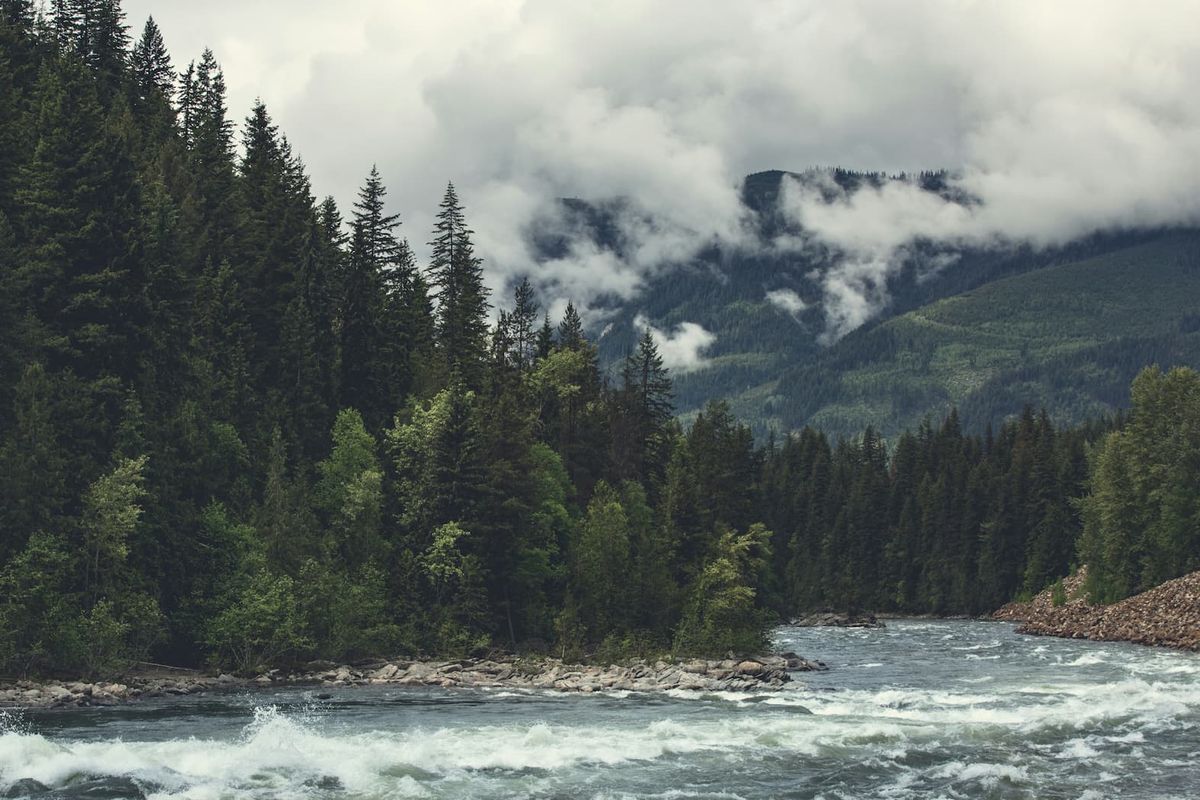
Yes, I was born in Revelstoke, B.C., which is a small town in the Rockies. Back then, there were only about 5,000 residents in the town, and we lived in an area called CPR Hill, which was about a kilometer from the downtown area. My parents’ home had three neighbours, so it was a pretty rural, mountainous neighbourhood. We often had black bears, deer, grouse, hawks, and owls in our yard. Living with nature was a big part of the first 12 years of my life.
My father was an avid skier. In fact, he won four events at the provincial championships two years in a row. He also hunted and fished to provide food for the family. Everyone in the area had a vegetable garden, and we had laying chickens for eggs. So being outdoors was a big part of my upbringing.
I was often outside helping Dad the best I could and probably got more in the way than actually helping. But I recall often asking him, “What’s this? What’s that?” usually pointing at a plant or bug or some other creature in and around our house. And Dad would usually say, “Well, I don’t know what that is, but pretty soon you’re going to go to school for 12 years, and then a few more after that, and then you can come back and tell me what it is.” I guess he planted the seed in my brain to go to school and study the natural world. And that’s what I did.
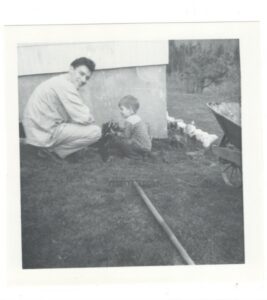
When I was 12 years old, we moved from Revelstoke to Vernon, B.C., a larger town in the North Okanagan. I think there were about 25,000 residents, and it seemed like we had moved to a major city. Dad still liked to fish and hunt, and it became routine, from when winter first broke up in the spring to when the snow returned in the fall, that Sunday was the day to go fishing. Dad and I continued to fish together as often as we could until he passed away on November 1, 2021. In the early years, we would hike through the bush to lakes and streams off the grid and explore the wilderness at every opportunity. So, I would have to say that my dad was perhaps my biggest influence on why the environment became so important to me.
Question: You had a science career path mapped out. But you ended up on a film set. How did that shift happen, and did it feel like a detour or a discovery?
I graduated from high school in June 1977 from Vernon Senior Secondary School. In the last year, I applied for scholarships and bursaries and got one for science and one for art. I decided that science was likely the better career path, so I passed on the art scholarship and started my post graduate studies at Okanagan College. I took a full load first year science program, but I always worked my love of drawing and art into my studies whenever possible. My mother was an avid painter, and I think I got a little of that gene in me, which would play out later in life when I fell into the world of filmmaking.
But in the early years, filmmaking seemed like something only folks that lived in Los Angeles or New York would do. Since money was an issue for our family, I took two years at Okanagan College to save money and then transferred to the University of British Columbia. Moving to Vancouver from a small interior town was a big step, and I wish I could say that I did it because it was a good career move. I actually followed a girlfriend who wanted to study at the University of B.C. and it turned out to be the best decision I could have made for my studies.
But as many young loves go, we broke up before my first year at UBC, and I was able to give all of my attention to a full-load science program. By the end of that first year at UBC, I realized I was mostly interested in the world of plants. I decided to make that my major, but I also remember discussing my interests with my college professor, Jack Schrader (not sure of the spelling), who was a brilliant and entertaining calculus teacher. He recommended that I have a major in one branch of science, but should consider a minor in another subject area. I decided on geography. This would prove to be an important choice, and how I ended up in the film business.
After I graduated from my B.Sc. degree at UBC, I made plans to go east and study at the University of Waterloo. However, as a precaution, all students apply at several institutions just in case the first choice didn’t work out. I decided to apply at UBC, but not in science, rather with the planning department. I thought it might be a good career move to have an applied Master’s degree instead of pursuing a pure science grad program. As it turned out, Waterloo first accepted me, then wanted me to take a qualifying year. So, I changed course and ended up back at UBC in the planning department, studying resource management, fisheries, and forestry issues. If I had moved to Waterloo, I would not have been in Vancouver when my friend Rick Cavazzi was looking for someone to help with a catering gig he got in the newly growing Vancouver film business.
I had met Rick back in Vernon at the Village Green Inn, he was a cook and I started out as a dishwasher. Over time, I moved up in the kitchen ranks and was trained on the job as a short order cook on the coffee shop side and later flipping steaks for the prestigious Hy’s steak house side. I worked part-time at the two restaurants for 5 years during my high school and college years. The skills I obtained as a cook got me that first job in the film business in 1984, while I was still working on my Master’s degree.
I continued to work on new films that came to Vancouver, but my career in the catering truck ended after just two gigs because of cost overruns on the food budget that were beyond my control. So, when we became the scapegoats for this and I gort fired. Since I had not been paid for about $3000.00 in overtime, I took a grievance to the Teamsters Local 213, who were trying to sign up the caterers under their film division. After the meeting, rather than chase compensation from the employer, it was decided that I would re-join the film crew as a driver and was given the job of driving of one of the film’s stars, Bonnie Bedelia. The film was The Boy Who Could Fly. It was an incredible experience watching a major hollywood film in production.
In 1983, during the first year of my Master’s degree, the Social Credit government led by Bill Bennett decided to do away with the regional planning level of government in B.C. It was a big blow because I had been tailoring my education towards a regional planning job. The minor in geography as an undergrad, and the grad program with a focus on regional planning and resource management, made the regional level of government a natural career fit for me. But with the change in government structure, and a new relationship that was moving towards marriage, I decided to embrace the new industry and see where it would lead.
And it soon led to some very interesting experiences. In 1986, I landed a job on the film Roxanne, starring Steve Martin. I got the job of his personal driver, which expanded into being one of his personal assistants on the show. We got along great, and when he learned of my upcoming thesis defence, he insisted that I spend the days in his trailer working on my defence. When I graduated, he bought champagne for the crew, and everyone raised a glass to my successful defence. I liked how the crew on each film became like a sports team or a circus crew with one goal in mind, to finish the film. Anyway, It was quite a moment when everyone celebrated my graduation, but through that experience, I became even more interested in pursuing a career in the film business.
Question: What was it that made you decide to build your own platform?
After launching The Pristine Coast at the Vancouver International Film Festival September 2014, I followed the same path I did with my first film, Who Killed Miracle? I put the film on the festival circuit to build awareness and hopefully win some accolades to raise the film’s reputation in the marketplace. Typically, most filmmakers look to distributors to get the film into different markets and the hope is to find a distributor with some clout to get your film in front of as many eyeballs as possible. .
The Pristine Coast was quite successful and was launched on all the major digital platforms and several channels around the world. The distributor told me that The Pristine Coast should easily recoup about $75,000 US per year for several years, which would have put the film in the black. But that didn’t happen, instead the film recouped less than $20,000 US over the life of the contract. It was a terrible return for a film that changed awareness about the loss of wild fish populations around the world. Not only did this poor return make it difficult to make the next film, but I also lost faith in the traditional distribution model.
I also noticed that many environmental filmmaker colleagues struggled to make more than a film or two because funding sources were hard to find and recouping the cost of the films they made was virtually impossible. So by then streaming was emerging as the new way to reach your audience. And companies like Netflix were growing in leaps and bounds. So, I decided to create my own distribution by launching a streaming service dedicated to environmental content.
After rooting around for a name, I found that The Green Channel was a trademarked name that had been dropped and it was available. I jumped at it and managed to get the name for the corporation and the trademark as well.
If I had known how difficult and costly this venture was going to be, maybe I would have taken a pass. But I didn’t, and the vision I had was to create a hub for filmmakers that wanted to tell stories and make films that could change the way humans interact with our environment. And I wanted to be sure that these wonderfully talented people could tell many stories and not be discouraged or forced to take work outside of their chosen field.
I also wanted this platform to be seen as a source of information where the public, decision makers, and even business owners would find the stories and information on the channel as a useful resource. I thought that the best way to overcome problems with the way humans were interacting with the environment was to know more about the problems and solve them. Not just for the benefit of the environment, but also for governments, businesses and the public to better plan their activities to fit better with our ecosystems. I saw Rachel Maddow on one of her podcasts if I remember correctly: she said, national reputation is an economic asset. And she listed off a few other things that are economic assets. . And I really like that notion: that many people whose focus is on business that many other parts of our society feed into a business so it can create wealth. So by my way of thinking, a healthy environment is an economic asset, protecting ecosystems that generate wealth for other businesses than your own is an economic asset, stopping climate change so that the forest sector isn’t obliterated by wildfires is an economic asset. And having a platform that protects all our business ventures from environmental disaster is an economic asset.
Question: TGC launched in 2017 and has continued since. How do you source content from around the world, and what do you look for when evaluating a film for the platform?
Environmental films and series come to us in a variety of ways: directly from filmmakers, through distributors, sometimes buzz through a film festival. But what might surprise, word-of-mouth often plays a big role in finding films that have not had wide distribution. So some of the gems you find on our service have been “found” again and give the library such depth.
But two other things are unique to how and what we acquire for The Green Channel. First, we paint a broad brush. A film might have a small story point or only one character that is green motivated. This could be a film for us. Why? Because the environmental movement exists in real life, it’s mixed up within a complex weave of society with contrasting points-of-view and each and everyone of us has a different level of appreciation or interaction with environmental issues. . So, I guess what I’m saying is, we see that an environmental story need not be the dominant theme or story point in a film to be something we would acquire for TGC. We want to reflect the diversity and complexity of environmental notions and ideas in normal everyday life.
Second, we make our decisions very quickly. I’ve sometimes gotten back to a filmmaker within an hour with a “yes” or “no”. I feel the industry has a reputation for leaving filmmakers hanging for long periods of time before making a decision. The reason we can make our decisions quickly is because our review team consists of two people. There is no one higher up than the two of us that needs to approve a purchase. If its a fit and we have the funds to make the buy, we go ahead right away and put it in our release pipeline.
Question: TGC’s tagline is “Voice of Living Things.” You’ve also said that the first step to solving an environmental problem is knowing about it. How do you see the relationship between awareness and action? Is watching a documentary on the couch really helping?
Yes, it’s well known that films can have a profound impact on how a community sees the world. I think this is especially true for The Green Channel. I can see the day when we have thousands of powerful stories on this platform that will contribute to positive changes in so many ways. If we just think about Alexandra Morton’s early observations of declines in chum and pink salmon populations in the Broughton Archipelago in the 1980s. What if she or anyone else in the area hadn’t said anything? What if her story had not been covered by various filmmakers over the years? I certainly wouldn’t have heard of this and then I wouldn’t have made the connection that what I was seeing was a die-off on the Chilliwack River. My learning of the problem prompted me to create The Pristine Coast, which built on Alexandra’s work and took the scale of the problem to something that was affecting the planet. So, yes, I believe that the first step in solving a problem is knowing about it. After that, the ball is rolling and change begins to happen.
I think watching a powerful documentary will certainly affect the person that watched it. But what do we often do when we hear about something or see something? We talk about it with our friends and our family. And they talk to their friends and families. And before you know it, the community knows about it. Some of those that heard about it will then call or write to their local politician and ask them if they are doing something about it. So, a film can lead to a lot of small actions that together begin a movement, and that movement will take away the social license to those that are ignoring or causing the issue. It’s powerful.
We have developed a few fun phrases to try and capture the imagination of our potential customers. I mean, how good is it that you can “help the environment by lying on the couch”. What this really is referring to is if a lot of people subscribe to a channel like The Green Channel, their small contribution each month will add up to a lot of small contributions. And together our subscribers will give The Green Channel the means to fund a lot of stories with environmental themes. My commitment is to put 90% of our revenue back into the hands of our filmmakers, creating content that builds a resource for the benefit of everyone on the planet.
Question: You serve on the board of the Squamish Streamkeepers. What does that work involve, and how does it connect to what you do with TGC?
Prior to learning that I had Lyme disease, I was experiencing a lot of strange health issues. Stomach pains, bleeding intestines, weakness, poor digestion, and I was told my symptoms were because of the stress of working long hours on big budget films. So, I bought a truck rental company so I could schedule my day, get to bed earlier, and even go fishing during salmon season.
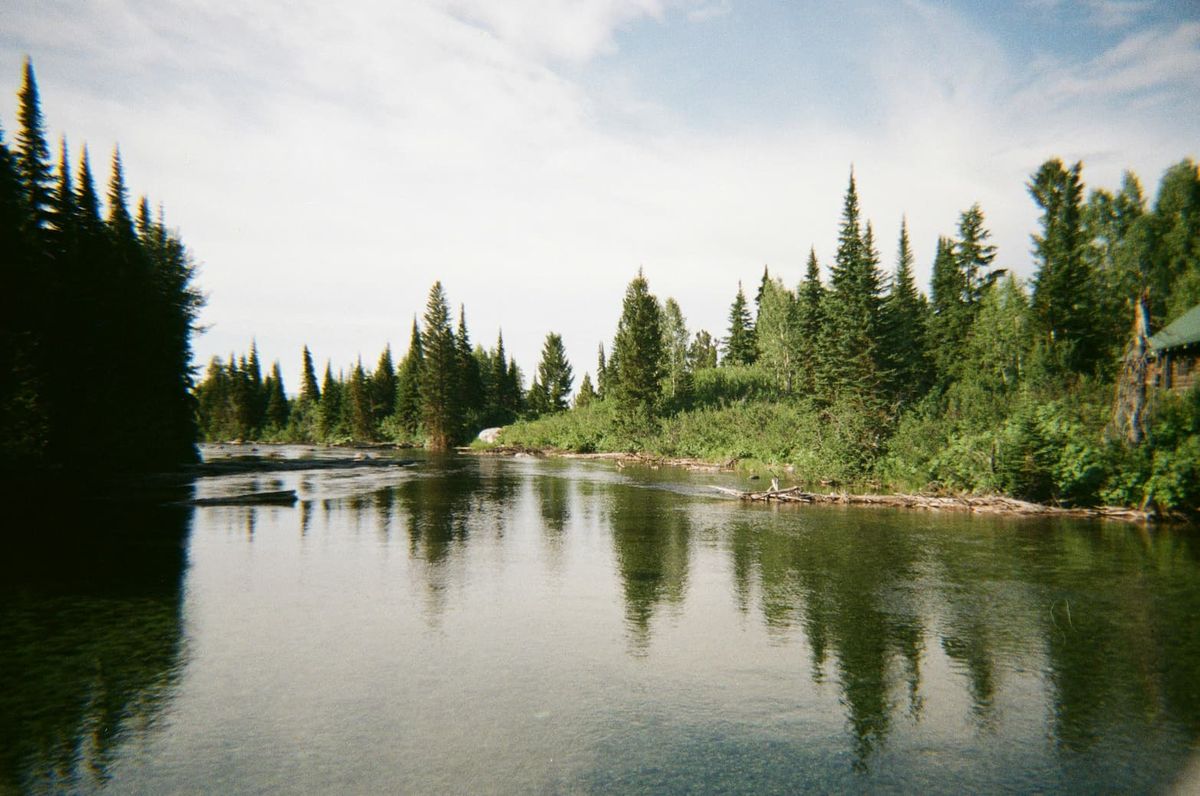
While I was trying to get healthy, I went to Naturopath Dr. Jonn Matsen and I noticed a photo of a fish on his desk. We got talking about fish and before I knew it, I had an invite to a Squamish streamkeeper event counting salmon on the tributaries of the Squamish River. We walked the Ashlu River, Chuck Chuck creek, Little Chuck creek, High Falls, Dryden Creek, and many more. It was rewarding and fun exploring such a vast watershed, and the data we collected helped the Department and Fisheries and Oceans with several Salmon Enhancement projects. It was so rewarding to go back year after year and see wild salmon successfully reaching spawning areas and laying their eggs in the gravel.
One small story that I would like to share. There is a very small creek that fell off a small cliff next to the road and ran along a ditch and through a culvert under the road. You wouldn’t think it was important at all. One day, Jonn Matsen noticed that the bottom end of that culvert had rotted out and made it impossible for fish to jump into it. So, Jonn and I took a rubber matt and a couple of ratchet straps and wrapped the culvert to create a better passage to the gravel ditch. A few weeks later we went back and there were 40 coho in the ditch happily spawning. They loved the gravel in that ditch and it was one of the most successful spots for coho that we monitored over many years. One small thing can make such a big difference.
My membership with the Squamish streamkeepers then grew into a directorship. There was a core group of about a dozen of us and we were all directors. The cool thing about the group is they also were my first audience for my films. It was a great way to test out a film before a wider public release and to find out what questions might come up after the screening. One of my films, The Herring People, features the work of the Squamish streamkeepers on their herring project. The streamkeepers were determined to enhance the herring populations in Howe Sound and False Creek. I followed the project for 16 years before I made the film. It has a classic second act where the protagonists kept coming up against problems, but they fought through them and finally succeeded in protecting herring eggs from harsh environmental conditions and creosote pilings.
Question: TGC is now hosting feature length documentaries, shorts, series and comedies with an environmental twist. What’s your vision for where the platform goes from here?
After going through some tough times post COVID, The Green Channel is now poised to reach wider audiences everywhere. My vision going forward is we will build on our documentary library and add narrative feature films and series. So you will see comedies, dramas, science fiction, horror all with a twist.
Currently, we release a new title on the platform each week, soon it will be two a week, and we are committed to adding more and more exclusive original productions to the platform.
Question: If someone is watching this from their couch and wants to do more for the environment but feels overwhelmed, what would you tell them?
I think with all the bad news out there about the environment, we can take a collective breath. I believe everything is reversible. I was able to reverse advanced Lyme disease and now have a full cure when I was told I had about 5 years to live. So I believe everything is reversible, we just have to find the way. Humans are the most resourceful species the planet has ever experienced. So if any species can sort out a mess, we can.
But if you feel overwhelmed, perhaps think of this. I met and interviewed Jane Goodall, who appeared in the pilot episode of The Firekeepers, and she had wonderful advice. She frequently said to anyone wondering what to do – just do something.
So consider joining a group like the Squamish Streamkeepers, buy a few trees and go plant them yourself in a place that needs a few trees, recycle, and perhaps above all support independent media so that we keep new ideas and new voices in the conversation.
There is a move afoot right now to consolidate and control the messaging by rich, powerful people who want to control what we hear and when we are going to hear it, mostly so they can maintain the status quo. Vote with your money, buy what they don’t own. Shop local. Don’t let the powerful control the message, support independent news outlets. I subscribe to the Narwhal and the Tyee and a few independent blogs. The consolidation of media is undemocratic. It’s not good for the long term survival of our society. It’s not good that some of the rich and powerful want to control the message about the environment. We can do things to make positive change. We can do this.
When you think that it’s all too much. Perhaps think about the culvert story I shared with you. All it took was two ratchet straps and a rubber mat and thousands of coho found a place to spawn. If each and everyone of us did one small thing like that to help other species that share the planet with us, the world would be a vastly different place. And you will feel such a great sense of satisfaction.
See More
The Green Channel has a vast catalogue covering different environmental topics. You can find our topics below:
Stream Award-Winning Environmental Films
Watch anywhere. Cancel anytime.
Then only CA$9.99/month