COP31 Ended Without a Deal: What Happened and What You Can Still Do
On November 22, the UN climate summit in Antalya, Türkiye, ended without its main agreement. After two weeks of talks and two extra days of negotiations, nearly 200 countries could not agree on the cover decision, which is the summit’s overall summary of what was decided. According to CBC, it was the first time since 2009 that a UN climate summit ended with no agreement.
If you followed the news from COP31, you may be wondering whether any of this is worth your attention. We think it is. We also think there is more you can do about it than it may seem.
What happened in Antalya
The draft at the centre of the talks was called the Antalya Pact, proposed by the joint Turkish-Australian presidency. By the final day, it contained “no references to oil, natural gas or coal.”
For many countries, that was the main problem, along with weak commitments on climate finance. The EU, the UK and several climate-vulnerable nations rejected the proposal in the final hours. Speaking for the EU, Ireland’s climate minister Darragh O’Brien said: “It is unconscionable that we would have a climate act that makes no reference to fossil fuel.”
Other countries saw the text differently. Speaking for the League of Arab States, Saudi Arabia defended the draft’s references to carbon capture and storage and rejected the idea that the technology is greenwashing. A Saudi representative said that “climate change requires all solutions on the table.”
In the end, COP31 president Murat Kurum of Türkiye accepted that there was no consensus. “I understand that there is no agreement on this text. For that reason, these decisions have not been adopted.” he said. UN Secretary-General António Guterres called the result a “deeply disappointing” setback, and he warned that there is “no ambiguity in the science.”
What was still agreed
The headline deal failed, but the summit did not end with nothing. According to Carbon Brief, COP31 saw a breakthrough on “channelling carbon-market revenues into the UN adaptation fund.” Countries also agreed to create a platform to help the least developed countries put their national adaptation plans into practice.
Some of the biggest questions were pushed to later. Countries did adopt a decision that sets out a phased approach to a new “just transition” mechanism, which is meant to make the move to a cleaner economy fair for workers and communities. However, the mechanism’s purpose and design will be worked out in Bonn next year, with a view to this being “formally agreed at COP32 in Ethiopia in November 2027.”
Other issues made no progress. Efforts to define tripling adaptation finance as $120 billion by 2035 “failed to make it into any final texts.” Countries also failed to reach consensus on agriculture negotiations once again.
What one person can do
It is easy to read all of this and feel that the answer is out of your hands. We understand that feeling, and if you live with Climate Anxiety, a week like this one can make it worse. However, the research on cutting emissions says that the way we live still matters.
Priyadarshi Shukla, a co-chair of the IPCC working group behind its 2022 report on cutting emissions, put it this way: “Having the right policies, infrastructure and technology in place to enable changes to our lifestyles and behaviour can result in a 40-70% reduction in greenhouse gas emissions by 2050.” So people and governments need each other. Governments can make the low-carbon choice easier, and people can decide to take it.
The UN’s ActNow campaign suggests ten everyday actions. Here are a few of them, plus one of our own:
- Talk about it: Climate scientist Katharine Hayhoe called her TED talk “The most important thing you can do to fight climate change: talk about it.” The UN also says that speaking up is “one of the quickest and most effective ways to make a difference.” You can start with your friends and family, and you can also let the people who represent you know that you care.
- Save energy at home: The UN suggests lowering your heating and cooling, switching to LED light bulbs and choosing energy-efficient electric appliances.
- Eat more vegetables and waste less food: According to the same UN guide, producing plant-based foods generally results in fewer greenhouse gas emissions and needs less energy, land and water.
- Repair before you replace: Reducing, reusing, repairing and recycling is another action on the UN’s list.
- Watch and learn: This one is not on the UN’s list, but we think it belongs there. A good documentary can help you understand a problem, and it often gives you something to talk about afterwards.
A few films to start with
We are not going to pretend that watching a film will fix the climate. However, it is a good start, because it is hard to talk about something you do not understand.
If the talks in Antalya left you frustrated, you can start with Pressure Point: a series of mishandled events, our founder Scott Renyard’s satire about environmental issues in British Columbia. It works through fictional interviews with politicians and senior bureaucrats. The description of one episode, Climate Change is a Good Thing, asks what a prime minister grounded in climate denial would make of a warming planet.
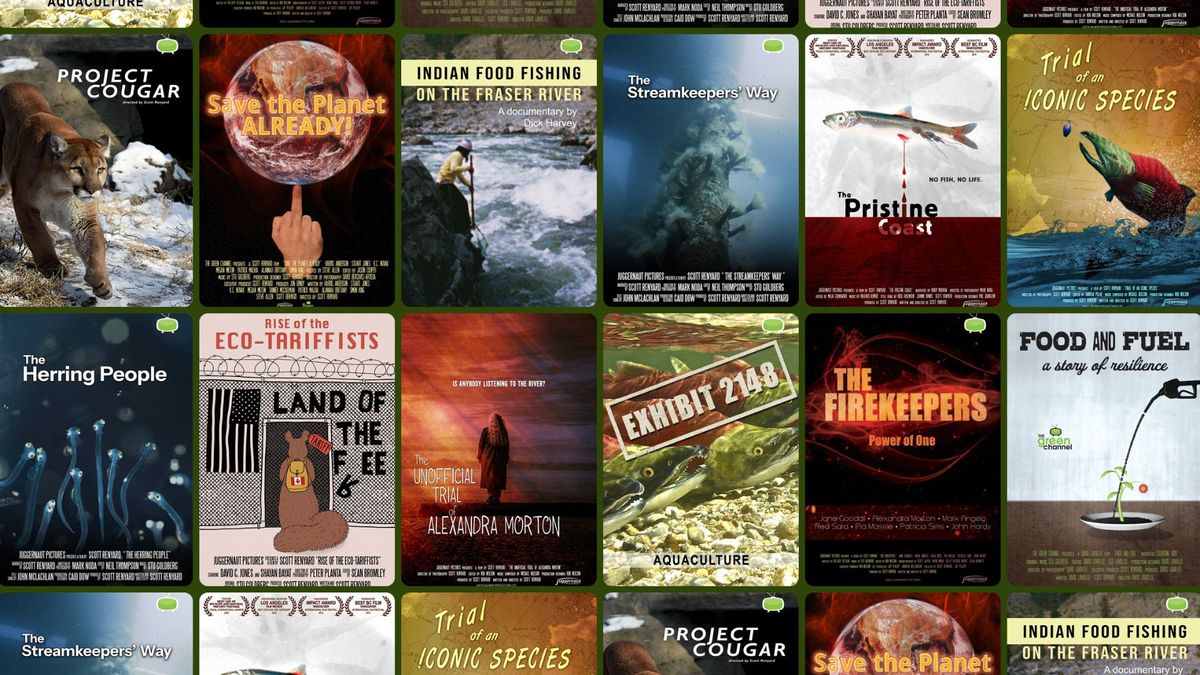
Another one is How to Boil a Frog, Jon Cooksey’s 2009 film, which is a comedic documentary about the consequences of overshoot. You can also watch Save the Planet Already!, a 2020 eco-comedy in which seven comedians perform live at the Kino Cafe in Vancouver. If you want to watch a bold documentary, System Upgrade: Rebooting Our Future is a good one.
If you have children, Live It Earth is a nature series that “connects kids and families with the real world,” and it may be an easy way to start the conversation at home.
For more, our collection of climate change documentaries covers wildfires, Arctic permafrost loss, climate displacement, climate-driven biodiversity decline, fossil fuel politics and grassroots climate movements.
Watch on our platform
These films are streaming now on The Green Channel, the environmental documentary streaming platform.
COP32 is a year away, and there is a lot we can all learn and talk about before then.
Stream Award-Winning Environmental Films
Watch the opening of any film free. No sign-up or card needed.