How to Watch Environmental Documentaries Without Losing Hope
A good environmental documentary does something the news rarely does. It makes a far-off problem specific, it’s often less sensationalistic, it digs deeper. You see one river or one family standing in a burned yard. It might make you angry or sad because it puts you close to something you cannot fix. But a good documentary can change that feeling of helplessness because it can give you information that you can act upon.
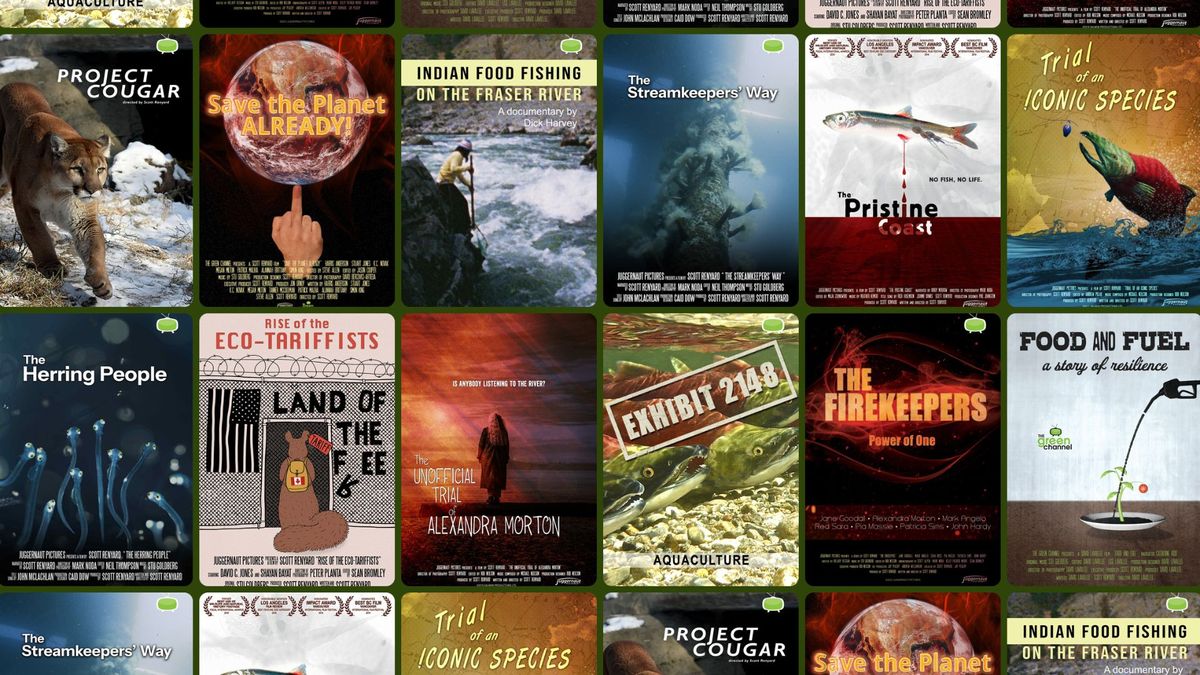
So we have a strategy on how to watch environmental documentaries without losing hope. And the strategy is how The Green Channel views its offerings. It starts from a plain premise: you can stay with difficult stories and still choose how and when you engage with them. But if it’s too much, switch it up. Watch an eco-comedy like Save the Planet Already, or something inspirational like an episode of The Firekeepers. Jane Goodall’s story is incredibly empowering.
Whatever you feel after a hard film is real, and it will likely not match what the person beside you feels: Fear, grief, anger, sadness, guilt, hopelessness. The Climate Atlas of Canada lists all of them as ordinary responses to climate change, varying in intensity from person to person.
The Green Channel lets you choose films by topic and by emotional weight. If you would rather look around first, start with environmental films about climate change.
You do not have to be numb to stay informed
There is a common idea that the correct way to take in bad environmental news is calmly, and that anything else means you are too sensitive. Feeling something about a wildfire season or a collapsed fishery is a reasonable response because you are human. The Climate Atlas of Canada goes further: feeling stressed about climate change is absolutely normal and it can sometimes push people toward action, however, for some it can also become hard to carry. Both can be true for the same person in the same year.
There are two terms we would like to explain briefly. The first one is Climate Anxiety. Climate Anxiety, sometimes called eco-anxiety, is worry about what is happening to the Planet and what comes next. It describes a feeling, not a medical condition.
The second one, which is Climate Grief, is the sadness that follows a real loss: a glacier, a species, a place that no longer looks the way it did. However, you do not have to adopt either label to recognize the thing it points at.
Please note that this is a viewing guide, and it is not a guide on how to cope with climate anxiety in general. Its aim is a relationship with information that you can sustain, rather than a larger pile of alarming content.
If you want documentaries about climate anxiety specifically, Feeling The Apocalypse addresses it head-on. It follows a psychotherapist as he works out what it means to live amid climate crisis and climate anxiety. It is a film about the feeling itself, and it may be an intense place to start.
Choose the film that fits your capacity today
Not every film has to be an endurance test. Think about what you have in you today, then pick accordingly.
For wonder and reconnection, start with Herring Spawn, Tide Pool or The Seal: Howe Sound – Atl’Ka7tsem. Herring Spawn is a few minutes of the spring spawn on the BC coast, with sea lions, eagles, gulls and seabirds all working the same water. Tide Pool is shorter still and made with children in mind. Neither is an escape from ecological reality, they are just reality at a scale you can see. There are more wildlife documentaries that reconnect us with the living world if you’d like to explore further. And we are adding more of this type of film all the time, seeing nature and the creatures in it is perhaps the next best thing to seeing nature live.
Another great documentary to watch is The Salish Sea – A Single Body of Life, which uses the image of a tree to help you see the sea as one connected whole. Another one is Living River, which follows a single wild BC river and everything that depends on it. This is such a great film because it reveals how we thought about the environment and ecosystems 50 years ago. It’s so great to be able to go back in time and reconnect with a simpler time.
You can also watch The Streamkeepers’ Way for practical, community-centred agency. It demonstrates that individuals and small groups can take action to change the course of a specific issue close to them. It’s a rewarding way to contribute to solutions in a real and practical way. And you can make new friends.
Don’t forget: There is no prize for watching the hardest film first.
Pick a shorter one. Watch with someone. Save the two-hour investigation film for another week when you have more time to give. And if none of these films work for you at the moment, you can browse documentaries by the kind of story you need today.
Watch actively, not endlessly
The difference between a documentary and a doom-scroll is what you do with it. Three practices help, though none of these options are meant to be clinical or scientific.
- Set an intention before you press play: Decide whether you are watching to learn about an issue, to reconnect with a place or to see an example of people acting together. Knowing why you chose the film will make it easier to walk away satisfied from the experience.
- You can always pause: If you are finding the content hard to watch. Perhaps it’s too emotional or shocking. Pause it. You can always come back or bring a family member or friend to watch it together. One thing for sure is you are experiencing the passion the filmmaker was feeling when making the film. Documentaries are works often cradled in passion. Passion from the storyteller wanting us to experience what they are feeling about a topic. Our founder, Scott Renyard, remembers the silence in the room after a screening of his film, The Pristine Coast. He said, the audience often needed a bit of time to unpack what they had just seen. It was shocking to learn the scale of the impacts from the open net pen fish farms. But when he was asked often with anger, what are we going to do about this? The answer is, you have already done something by watching the film. Just by understanding the issue, the social license for the environmental damage being allowed previously begins to erode and eventually our decision makers will have to act. In the case of that film, it has worked because the public wants something to be done about it.
- Give the film somewhere to go: Talk about it, mention it to a friend. Write down one question it left you with. Text it to someone who would care. The Climate Atlas of Canada makes a point worth sharing here: people with supportive networks and reliable climate information appear to fare better than those who stay isolated or in denial.
The Streamkeepers’ Way is a useful test case. It follows volunteers around Howe Sound and Burrard Inlet trying to understand and protect herring eggs, and it keeps the experiments that did not work.
If you watch it to see how local stewardship happens, it may lead to a conversation about your own shoreline with friends. This film is a great example of resilience and determination. They found a solution to the problem they were working on even if another problem lurked nearby. But also know these films are very important for decision-makers like politicians to know about. They provide new insights that the government can use to take action to solve the issue. Consider sharing with a decision-maker in your area.
Watch with intention today: Explore Ocean and Marine Documentaries.
Pair the hard truth with a story of agency
Hopeful environmental documentaries often get misread. Hopeful does not mean skipping the films about harm or ending every story on a fix. It means that alongside the film about the problem, you also watch the film about people responding to it. You see that some people are doing something about the problem and this is what gives you hope.
The remarkable thing about the Streamkeepers’ Way is that the news about this group of volunteers spread up and down the British Columbia coast. Many wharves were rebuilt without creosote to prevent harm to herring eggs. And other volunteer groups sprung up in other communities to take action to protect Pacific herring spawning habitat. It all came about because people began to care about herring and the communities and their decision-makers quickly followed their lead.
Also on The Green Channel, there are two environmental documentaries with solutions at their centre. The Future of Energy is a positive film about communities reimagining their relationship with energy and with the planet. Another one is Food and Fuel: A Story of Resilience, which sets Cuba’s “special period” next to one person’s experiment in living with less fossil fuel on BC’s Sunshine Coast. Please note that the Cuban history is more complicated than any film can carry, and the BC half is one person’s attempt. Solutions are complicated and hard to pull off in our world today, but each person’s attempt and our coverage of the story will provide a stepping stone to a better solution.
Wildfire Warriors belongs here too. It is set during BC’s 2017 fires and follows Tsilhqot’in communities protecting their homes and territory. It is a film about a Nation making its own decisions under pressure. Watch it as their story, made on their terms, rather than as inspiration for yours. Agency in all four films is collective, place-based and imperfect, which is what makes it believable and beautiful.
Explore films about climate action.
Let connection, not perfection, be the next step
After watching an environmental film, the pressure to do something can weigh as much as the film did. The next step does not need to be large. Staying connected to the issue is a step in itself.
There are some options we can recommend here. Watch the film with a friend and talk about it for one moment – not five, not ten, just one. Walk a shoreline, a river or a park you already know, and look at it the way the film looked at its place. Try to find and read the impact resources some films provide. Find out the name of your local watershed or who is looking after it. Or choose a second, gentler film for next time and call that enough. Have you seen John Hardy’s episode in The Firekeepers? One of his actions was to switch from office meetings to walking meetings so they could pick up garbage while they talked.
Take Haida Gwaii: On the Edge of the World. It follows Haida Gwaii residents and their relationships with community, resources and the natural environment. It shows a different way of standing in relation to a place. It speaks for the people in it, not for every Indigenous Nation on the Planet.
Watch the Indigenous documentaries on our platform.
Environmental films are hard because the issues are hard.
One of The Green Channel’s goals is to acquire or make a range of films and series to satisfy all of our moods. But most of all we want to provide you with films that dig deep into an issue so that a solution, if not found, is much closer. A good environmental documentary we believe will provide more hope, not less, because we know now what to do to fix a problem.
Find an environmental film that meets you where you are, or start watching with The Green Channel on a 7-day free trial.
Please note that The Green Channel is a streaming service showcasing compelling, investigative and thought-provoking environmental films in different genres including eco-comedy. Our articles are for educational and informational purposes only and are not a substitute for medical or mental-health assessment, diagnosis or treatment. If climate-related distress is persistent, is affecting your day-to-day life or is making you feel unsafe, consider reaching out to a qualified mental-health professional or a local crisis line.
Stream Award-Winning Environmental Films
Watch anywhere. Cancel anytime.
Then only CA$9.99/month