The Wolverine You Will Probably Never See: Chasing a Trace is now on The Green Channel
When our founder, Scott Renyard, was about ten years old, a wolverine stole his fish, and he never saw it happen.
“I remember when I was about 10, my Dad and I were fishing way up Laforme Creek near Revelstoke, B.C.,” Scott says. “We found a log jam and managed to catch a couple of dolly varden trout and Dad put them on a log right behind us. A few minutes later we caught another fish and went to put it with the others. And they were gone. When we left the log jam, Dad saw fresh wolverine tracks in the dirt coming off the logs we were on. Dad told me at the time that the wolverine came up right behind us and stole our catch and we did not even know it was there. They are very smart and elusive.”
For most people, a set of tracks is as close as they will ever get to a wolverine. Parks Canada says as much on its page about wolverines in Kootenay National Park: it is rare to see one.
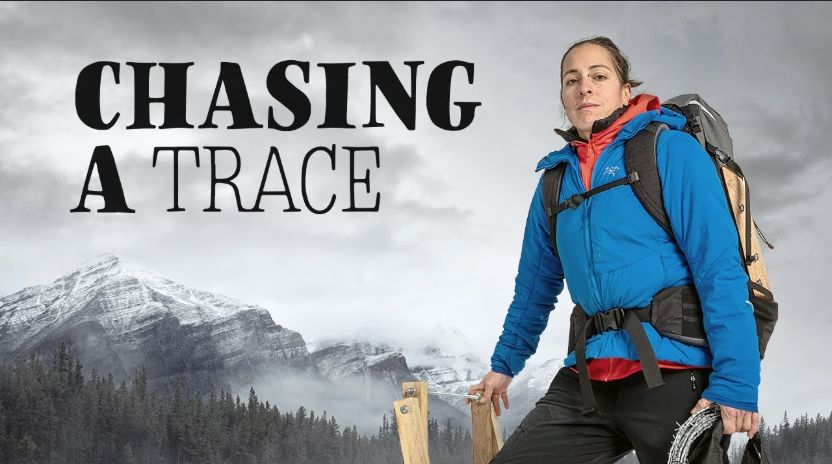
Chasing a Trace is a film about a researcher who went looking for wolverines anyway, and it is now streaming on our platform.
Twenty minutes in the high alpine
Chasing a Trace is a 2019 film written, directed and produced by Leanne Allison. The film follows researcher Mirjam Barrueto into the high alpine of western Canada, where she traces wolverine tracks and sets up a study to gather more data on an animal we still know very little about.
The film runs 20 minutes. It features Mirjam Barrueto, Marco Musiani, Bob Sayer, Jesse McClintock and Jon Effa, with wolverine footage by Andrew Manske and Peter Mather and story editing by Nettie Wild.
Why wolverines are so hard to count
An adult wolverine is roughly the size of a medium-sized dog, according to the Cascades Wolverine Project. The area a wolverine uses is another matter. Parks Canada says a male wolverine’s home range can reach 1,582 square kilometres, which is larger than Kootenay National Park itself.
So a researcher cannot wait in one place and expect a wolverine to walk by. There are not many of them, and each one moves across a vast area.
Researchers have found a clever way around part of that problem. Every wolverine has a unique, light patch of fur on its chest, and Parks Canada says these chest patches are used to identify individuals, almost like a fingerprint. Because of that, a remote camera in the right location can tell researchers which wolverine walked past, and not only that a wolverine was there.
What the research has found
In 2018, the wolverine was listed as a species of Special Concern under Canada’s Species at Risk Act.
Parks Canada staff also took part in a ten-year study of wolverine populations in the Canadian Rocky Mountains, using remote cameras and bait stations in Kootenay, Yoho and Banff national parks. Over those ten years, the number of wolverines in the study area declined by 39 percent.
The same study found that wolverines were less likely to be present in areas with more human recreation and development, and that more wolverines were found in areas with persistent spring snow. Parks Canada also notes that wolverine density inside protected areas like national parks can be three times higher than in unprotected areas.
A problem bigger than one animal
Barrueto sees her work as useful beyond wolverines. In the film, she puts it this way: “I want to help other scientists studying similar species, similar questions. Snow leopards, tigers. We have the same problem, animals that are hard to study, there are not many of them.”
Scott sees the same thing. “Everybody knows the name and most people have never seen one,” he says. “That is the problem Mirjam is working on, and it is the same problem facing anyone trying to protect an animal that is difficult to count.”
Another film to watch with Chasing a Trace
Leanne Allison also made Highway Wilding, which is streaming on our platform as well. Highway Wilding is about the wildlife crossings built over and under the Trans-Canada Highway in the Canadian Rockies, and wolverines appear in that story too. In the film, road ecologist Dr. Tony Clevenger says: “If wolverines, one of the wildest, most elusive creatures on earth, can adapt to these structures, I am convinced now that any animal can.”
If you watch the two films together, Chasing a Trace shows you how much work it takes to find a wolverine and Highway Wilding shows you one of the ways people are helping wolverines and other animals get across a busy highway.
Chasing a Trace on The Green Channel
Chasing a Trace is streaming now on The Green Channel, the environmental documentary streaming platform. If you would like more films like it, you can explore our Wildlife Documentaries collection.
Watch Chasing a Trace on our platform today.
Stream Award-Winning Environmental Films
Watch anywhere. Cancel anytime.
Then only CA$9.99/month